Blog.
Floor Stripping Machines and Scrapers for Fast Uplift
Aug
Rip-Out Ready: Floor stripping machines, scrapers, and blade packs for fast uplift
Autumn refurbs move fast. Tenants to hand over, fit-out windows to hit, and no time for a slow uplift. The right mix of machine power, hand tools and blade spares keeps you moving, room after room, without waiting on parts or fighting blunt edges.
This guide shows how to choose rotary versus blade-driven floor stripping machines, when to switch to manual, how to match carbide and steel blades, and a proven sequence that controls dust and waste. There is also a compact Uplift Kit checklist to minimise downtime, with SAVE prompts and UK-wide fast dispatch.
Rotary vs blade-driven: which machine for the job?
Rotary strippers
- Best for adhesive residues, old levelling nibs and light coatings after the main covering is up.
- Pair with graded pads or attachments, keep extraction running, and step through abrasives to avoid glazing.
- Good for smoothing a surface to hand-over for floor preparation and levelling.
Blade-driven strippers
- Purpose-built to shear and lift bonded coverings such as vinyl, lino, carpet and tiles.
- Faster initial uplift on larger areas, especially with the right blade width and flexibility.
- Swap to tougher, narrower blades for stubborn adhesives or brittle, patchy screeds.
Tip: Many sites run both. Use a blade-driven floor stripping machine for the rip-out, then a rotary or single-disc sander to chase the residue before priming and levelling. If you plan to level straight after, have your floor preparation tools and spares ready to keep momentum.
When to go manual: edges, fixtures and awkward substrates
Machines save hours across open areas. Manual tools finish the job.
Use heavy-duty floor scrapers and long-handle scrapers for edges and under radiators. Pry bars, tack lifters and nail pullers remove grippers, thresholds and fixings. Keep a sharp utility knife for sectioning and safe rolls; a hooked blade helps when scoring carpet or vinyl without cutting into the subfloor. You can browse purpose-built flooring removal tools if you need a ready selection suited to uplift.
If you hit:
- Fragile screeds or loose patches, reduce machine aggression and switch to a hand scraper.
- Tight perimeters or around frames, cut coverings into smaller panels, then lever and lift with a scraper and tack lifter.
- Stubborn adhesive ridges, try a stiffer blade, heat-assisted softening where permitted, then scrape in passes.
Carbide vs steel: pair the right blade to the task
- Steel blades, flexible and wide: best for vinyl and lino to slide under and shear cleanly. Use wider profiles in open areas to maintain pace.
- Steel blades, narrow and tough: target thresholds, grippers and perimeter runs where precision matters.
- Carbide blades or carbide-tipped scraping blades: harder edge retention against old adhesive, paint and coarse residues on concrete or screed. Use controlled pressure to avoid gouging.
Carry spare scraper blades and a protector sleeve so you can change as soon as you feel drag. A mixed blade bundle covers wide-shear, narrow-edge and tough-residue needs without a parts run.
The fast uplift sequence that works
1. Survey and section
- Walk the run, confirm coverings, adhesives and expected residues. Cut large rooms into lanes or panels with a utility knife so waste rolls safely and staff can rotate tasks.
2. Edge-first release
- Free perimeters, trims and door bars. Lift gripper and nails early to protect machine blades and wheels.
3. Machine the field
- Use a blade-driven floor stripper with the correct blade width and angle. Keep the blade sharp and flat. Roll or stack waste by lane to keep the floor clear and safe.
4. Residue removal
- Switch to a tougher blade or a rotary/single-disc sander to reduce adhesive to a thin, bondable film or to bear where spec requires. Keep extraction on to limit dust.
5. Detail by hand
- Hand-scrape corners and transitions. Re-cut any stubborn strips rather than forcing them.
6. Prep for the next trade
- Vacuum thoroughly. If levelling is next, stage your screeding tools and spiked rollers so you can move straight into priming and pour.
Dust control and disposal pointers
- Fit a vacuum or shroud to sanding machines where compatible. Keep bags or extractors emptied before they lose pull.
- Mist stubborn dusty patches lightly if permitted by the site method statement, then scrape rather than grind them into the air.
- Bag waste in stages. Separate sharps such as blades and grippers into sturdy containers. Follow site rules for adhesive-contaminated waste and check for any local restrictions before haulage.
The Uplift Kit: what to carry to avoid downtime
Keep this kit in the van so you do not stop mid-rip-out:
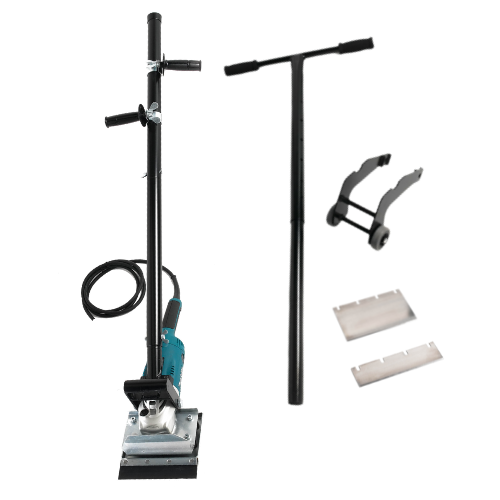
- Floor stripping machine with matched blade set, plus spare blades and fixings
- Long-handle floor scraper and compact hand scraper for corners
- Blade bundles: flexible steel, narrow steel, and carbide scraping blades
- Utility knife with spare straight and hook blades
- Tack lifter, pry bar, nail puller, staple remover
- PPE: safety glasses, gloves, hearing protection, dust mask or respirator, and comfortable knee pads
- Clean-up: heavy-duty refuse sacks, contractor tubs for sharps, broom and site VAC
SAVE time and money with curated uplift kits, floor stripping machines and blade bundles, all stock-ready with UK-wide fast dispatch. Add spare blades now to cut delays later.
FAQs
What is the machine that takes up flooring?
- A blade-driven floor stripping machine lifts carpet, vinyl and tiles by shearing under the material. Many teams then use a rotary or single-disc sander to chase leftover adhesive.
What tools do you need to remove flooring?
- A stripping machine plus manual finishing tools: long-handle floor scraper, hand scraper, tack lifter, pry bar, nail puller, and a utility knife with spare blades. See our range of flooring removal tools.
What is the best way to strip a floor?
- Section the room, release edges first, machine the field with the correct blade, then remove residue and hand-finish corners. Control dust with extraction and clear waste in stages.
How long does floor stripping take?
- It varies by material, adhesive and room size. Open commercial spaces with the right machine and blades are typically fast; small, cut-up rooms or heavy residues take longer.
How much should I charge to remove flooring?
- Pricing depends on square metres, covering type, access, residue removal and disposal requirements. Many trades price by m² with a minimum call-out, then add rates for heavy adhesive or night works. Confirm site conditions during survey before quoting.
Next steps
- Need a fast-turn uplift setup? Start with a blade-driven floor stripping machine, then add a long-handle scraper and mixed blade bundle. Top up PPE and spares so you can keep moving through autumn refurbs.
- Planning to level right after uplift? Stage your floor preparation tools and accessories so you can prime and pour without a second visit.
Stock-ready, bundle and SAVE prompts apply while supplies last. Order today for UK-wide fast dispatch.