
Blog.
The Pro’s Guide To Heat Seaming Irons: Flawless Carpet Joins Every Time
Sep
The Pro’s Guide To Heat Seaming Irons: Flawless Carpet Joins Every Time
Autumn is the perfect time to move indoors and tackle carpet refits. If you want joins that disappear, a good heat seaming iron, the right tape, and solid technique will do the heavy lifting. This guide walks you through choosing and using a carpet seaming iron, so your seams hold firm, sit flat, and stay hidden in everyday UK homes and light commercial spaces.
What a carpet seaming iron actually does
A carpet seaming iron heats the thermoplastic adhesive on seaming tape, melting it into the backing so two carpet edges bond into a single, reinforced joint. The goal is simple, a strong bond with no telegraphing, no peaking, and minimal visual trace.
- Temperature: Most irons run roughly 100 to 220°C, with common working ranges around 145 to 185°C depending on tape and backing. That answers, how hot does a carpet seam iron get? Hot enough to fully liquify seam tape, not so hot that it scorches the backing.
- Control: Thermostats and dial markings are your friends. Look for clear increments and stable heat recovery across the plate.
Choosing the right seaming iron
You will see differences in build, plate design, and controls. Prioritize:
- Thermostat control: A stable thermostat matters more than headline max temp. Quality irons from Crain give consistent heat across the sole plate, cutting down on hot spots that cause peaking or seam show.
- Sole plate types: Smooth, non-stick coated plates glide through tape without dragging adhesive. Some plates use vented channels to push heat into the tape bead evenly. A slight centre ridge helps keep the seam peaked during set, then you flatten with a roller.
- Corded vs cordless: Corded is the trade standard for reliability and constant heat. Cordless options, often battery or base heated, are handy on stairs or awkward landings. If you go cordless, choose models with quick heat recovery and spare batteries so you keep pace.
- Nose shape: A narrow, tapered nose helps you feed under the pile and move steadily without lifting fibres.
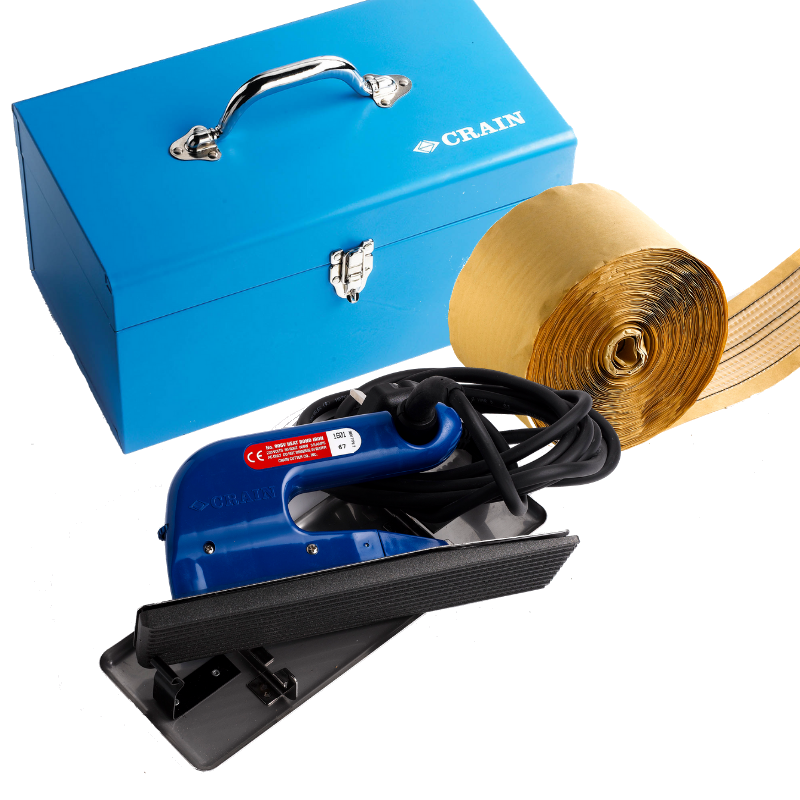
You can find a quality carpet seaming iron and related accessories in one place at Flooring Tools UK. Recognized brands like Crain sit in our range.
Tapes that match your job
Not all hot melt tapes are equal. Choose:
- Standard tape: Everyday tufted and loop pile domestics.
- High tack or high melt: Denser backings, heavy pattern goods, or where higher heat resistance is preferred.
- Moisture barrier tapes: For specific substrates where vapour concerns exist. Always follow manufacturer guidance.
Store tapes flat, away from heat. Bent spools can make feeding awkward and uneven.
Can you seam without an iron, or use a regular iron?
Can I use a regular iron to seam carpet? No. Domestic clothes irons lack the channelled sole plate, heat stability, and controlled glide needed. They risk scorching and uneven melt, which causes failures and visible joins.
Can you seam carpet without an iron? For broadloom, not if you want a durable, tidy seam. Some double-sided tapes exist for temporary joins or tiles, but proper broadloom seams require a seaming iron and hot melt tape.
Where not to put carpet seams
Plan Seam placement before you cut:
- Avoid high traffic walk lines, room centres, and direct sunlight streaks that highlight across the pile.
- Keep seams out of doorways and pivot points.
- Run seams with the main light source, not across it, and always with the pile direction matching. For patterned goods, place along pattern lines where possible and respect pattern match allowances. Good seam planning starts with good subfloor prep. Take time with floor preparation so ripples and shadows do not betray the join later.
Step by step, invisible seam technique
1. Prep and cut: Use a sharp loop pile or cushion back cutter and a straightedge. Trim both edges cleanly, ideally with a slight bevel on each cut so they meet tight at the top face. Replace cutting blades often for clean edges. A quality utility knife helps with final trims.
2. Set the tape: Position the tape adhesive side up under the seam path; centre it carefully.
3. Heat the iron: Dial to the recommended range for your tape and carpet, commonly 160 to 180°C to start. Allow full heat recovery.
4. Feed and close: Insert the iron under the seam, so the plate sits on the tape bead. Pull at a steady pace, around 75 to 100 mm per 5 to 7 seconds, depending on melt. Lower the carpet edges behind the iron so they meet gently with no overlap.
5. Roll and cool: Immediately use a seam roller, medium pressure, to marry the backings and push adhesive into the primary backing, not up through the pile. Follow with a heat shield or a flat, cool board to set the seam as it cools. Avoid walking on it until set.
6. Stretching: Use a knee kicker for carpet or a power stretcher to take tension off the seam as it cures, which reduces peaking and future ripple.
Common mistakes to avoid
- Overheating adhesive: Causes bleed through, stiff lines, and telegraphing. If you smell scorching or see smoke, reduce temp, slow your pace slightly, or both.
- Iron too slow, tape too hot: Leads to bubbles, soft backing, and smear.
- Poor edge cuts: Ragged or frayed edges show; recut with sharp carpet cutting tools.
- No cooling protection: Without a heat shield and gentle weight, seams can peak as they set.
Troubleshooting visible seams, ripples, and joins
- How to make carpet seams less noticeable? Align pile direction, use the correct tape, and keep the butt joint crisp. Roll while warm, then weight or shield during cool down. Brush pile across the join to blend. Trim stray fibres with a carpet trimmer, not scissors.
- Should you be able to see carpet seams? In most domestic installs, seams should be barely noticeable from standing height in normal light. Up close and across the nap, a faint line can be normal, especially on low pile or heavily patterned goods.
- How to hide a join in carpet? Re trim edges clean, reset with the correct heat, roll thoroughly, then cool under a shield. If telegraphing persists, check for over melt; you may need a slightly lower temperature and a steadier pull.
- Ripples after seaming: Often a tension issue. Re stretch with a power stretcher, working away from the seam. Check underlay and gripper placement. If the seam is proud, warm lightly with a heat shield between iron and pile, re roll, and cool weighted.
Safety tips that save the day
- PPE: Heat-resistant gloves and knee pads.
- Ventilation: Hot melt fumes are minimal but keep air moving.
- Cable management: If corded, route behind you and under the carpet edge where safe.
- Hot parking: Always park the iron on its stand, never face down on the carpet.
- Site tidy: Keep your seam path clear. Hot tools and loose offcuts do not mix.
Recommended add-ons for faster, cleaner seams
- Seam rollers, smooth or star wheel, to drive adhesive into the backing without disturbing the pile.
- Heat shields to prevent glossing and protect delicate fibres during cool down.
- A choice of seaming tapes to match backing and traffic.
- Stretching gear to set tension correctly.
If you are refreshing your kit for autumn, explore our range of flooring tools, including a pro grade carpet seamer, seam rollers, and stretching tools.
Quick answers to common questions
What can I use for carpet seams? Use hot melt seaming tape with a proper carpet seaming iron. Add a seam roller, heat shield, and stretcher for best results.
Final checks before you start
- Subfloor smooth, dry, and flat.
- Underlay fitted tight to gripper.
- Edges cut clean, pile direction matched.
- Tape centred, correct temp set, roller ready.
Summary
Flawless seams come from steady heat, clean cuts, and controlled cooling. Choose a seaming iron with reliable thermostat control and an appropriate sole plate, match your tape to the backing, and keep the iron moving at a consistent pace. Plan seams where traffic and light will not highlight them, then roll and shield as they cool. With brands like Crain available, plus add-ons like seam rollers, heat shields, and seaming tapes, you are set up for invisible joins that last.
Looking to kit out for the season? Browse our carpet seaming iron options and wider flooring tools for dependable trade results