
Blog.
Vinyl and LVT Welding Setup for Summer with Leister Tools
Jun
Vinyl & LVT Welding: Leister Setups, Nozzles and Welding Wire – Get Summer Jobs Done Faster
Summer can be a great time to increase productivity on flooring installations, but warmer conditions can also create challenges when welding vinyl and LVT seams. Higher substrate temperatures, faster adhesive flash-off rates and softer welding rods mean there is less room for error.
Getting your Leister welder, nozzles and consumables set up correctly before you start can save valuable time, reduce rework and help you deliver consistently professional results.
In this guide, we’ll cover Leister Universal Auto and Triac ST selection, choosing between 110V and 220V, recommended temperature ranges, travel speeds, nozzle options, welding rod selection, summer-specific installation advice and the essential spares every installer should carry.
If you’re ready to upgrade your equipment, browse our welding tools range:
https://www.flooringtoolsonline.co.uk/tools/vinyl-welding/
Choosing the Right Leister Welder for Summer Work
Selecting the correct welding machine is the first step towards achieving clean, consistent seams.
Leister Triac ST
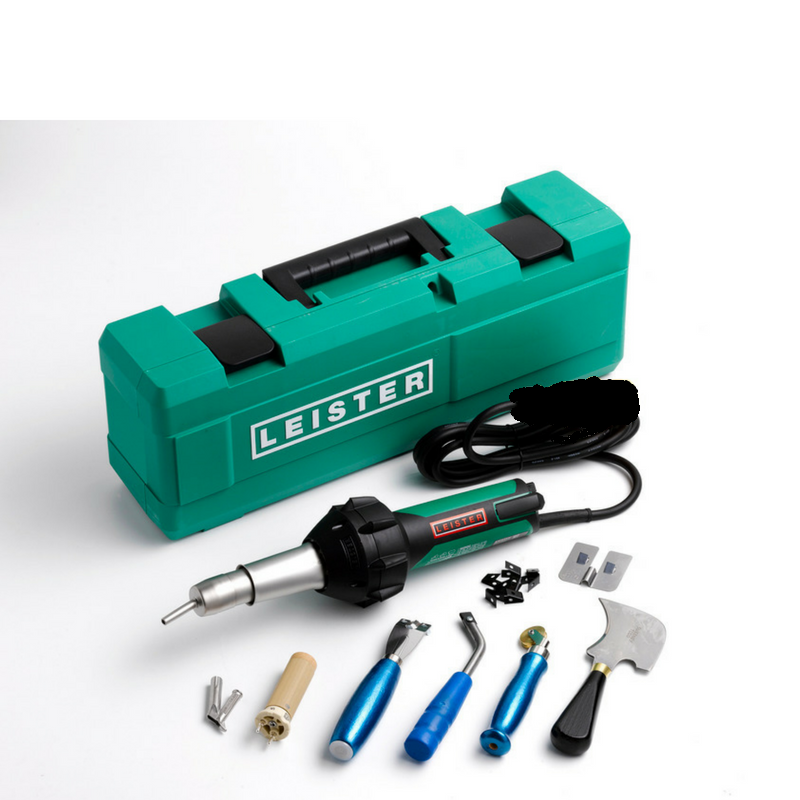
The Leister Triac ST remains one of the most popular handheld hot air welders for vinyl and LVT installation.
It is ideal for:
- Staircases
- Doorways
- Perimeters
- Repairs
- Detailed work
- Smaller installations
Its compact size, reliability and versatility make it a staple tool for flooring professionals.
Leister Universal Auto
For larger projects involving long, straight seams, the Leister Universal Auto offers significant advantages.
Benefits include:
- Consistent travel speed
- Reduced operator fatigue
- Faster installation times
- More uniform weld quality
This makes it particularly suitable for commercial environments such as:
- Schools
- Hospitals
- Care homes
- Offices
- Retail spaces
110V vs 220V: Which Should You Choose?
Your choice largely depends on the power supply available onsite.
110V
Commonly used on:
- Construction sites
- Commercial refits
- Large-scale developments
Typically powered via site transformers.
220V
Best suited to:
- Domestic installations
- Workshops
- Standard mains-powered environments
Always match your welder to the power source available onsite to avoid costly downtime.
You can view available Leister Triac ST models here:
https://www.flooringtoolsonline.co.uk/buy/leister-triac-st-220v-110v/
Recommended Temperature Settings and Travel Speeds
Summer temperatures can dramatically affect welding performance.
Always run a test weld on an offcut of the actual flooring material before starting production work.
As a general guide for PVC sheet vinyl and LVT:
Handheld Leister Triac ST Settings
Recommended starting range:
300°C – 420°C
Adjust according to:
- Rod flow
- Ambient temperature
- Material thickness
- Surface finish
Travel Speed Guidelines
Using a speed nozzle:
1.5 – 3.0 metres per minute
Automatic welders can often run faster once settings have been fine-tuned and seam quality has been confirmed.
What a Good Weld Looks Like
Look for:
- A slight, consistent bead on both sides of the rod
- No glazing or scorching
- Original floor texture remaining visible
- Clean trimming with minimal tear-out
Remember that heat is controlled at the nozzle, not simply by the dial setting. Clean, correctly sized nozzles deliver more predictable results.
Why Proper Pre-Grooving Matters
Strong welds begin long before the hot air welder is switched on.
For most sheet vinyl installations:
- Groove approximately two-thirds of the material thickness
- Ensure the groove is clean and consistent
- Remove all dust and debris
- Check for uniform seam width throughout
A poorly prepared groove can cause:
- Weak bonds
- Incomplete fusion
- Visible seam defects
Keep welding rods clean and dry throughout the installation.
On particularly hot days, it can help to shade seam areas and allow adhesives to cure fully before welding begins.
Choosing the Correct Welding Nozzle
Different welding situations require different nozzle types.
Pencil Nozzle
Best for:
- Detail work
- Corners
- Repairs
- Spot heating
Provides maximum control in confined areas.
Speed Nozzle
Often referred to as:
- Crocodile nozzle
- Fish-tail nozzle
Ideal for:
- Long seams
- Faster production work
- Consistent rod feeding
These nozzles direct heat into the groove while simultaneously guiding the welding rod.
Narrow vs Wide Speed Nozzles
Narrow Nozzles
Suitable for:
- Tight curves
- Short seam sections
- Detailed installations
Wide Nozzles
Better for:
- Long straight runs
- Consistent heat distribution
- Higher productivity
Always Carry Spare Nozzles
Nozzles wear over time.
Damaged or carbonised nozzles can:
- Restrict airflow
- Create inconsistent heating
- Increase the risk of scorching
Every installer should keep spare:
- Speed nozzles
- Pencil nozzles
- Cleaning brushes
- Heat-resistant stands
Selecting the Right Welding Rod
Always choose a welding rod designed specifically for the flooring material being installed.
For most commercial vinyl flooring:
3mm PVC Welding Rod
The most common option, available in colour-matched versions for major flooring brands.
Best practice includes:
- Storing rods in sealed bags
- Keeping rods out of direct sunlight
- Testing colour and fusion before starting
A simple cross-section test can confirm proper fusion.
You should see:
- Full bond at the base of the groove
- No voids
- No gaps
- Consistent material fusion
Trimming for a Professional Finish
The quality of the final trim has a major impact on the appearance of the completed seam.
First Trim
Allow the weld to cool until it is warm to the touch.
Use:
- Quarter-moon knife
- Trimming guide
Final Trim
Once completely cool, perform a second flush trim.
Avoid rushing the process.
In warm weather, trimming too early can:
- Smear the rod
- Pull material from the groove
- Leave visible imperfections
Quick Summer Welding Troubleshooting Guide
Rod Lifting or Weak Bond
Possible causes:
- Temperature too low
- Travel speed too fast
- Groove too shallow
- Adhesive not fully cured
Solutions:
- Increase temperature slightly
- Slow down travel speed
- Deepen groove
- Confirm adhesive cure
Scorching or Glossing
Possible causes:
- Excessive temperature
- Moving too slowly
- Dirty nozzle
Solutions:
- Reduce heat
- Increase speed
- Clean or replace nozzle
Underfilled or Sunken Weld
Possible causes:
- Excessively deep groove
- Trimming too soon
- Overheating
Solutions:
- Reduce temperature
- Review groove depth
- Allow longer cooling time
Summer Handling Tips That Save Time
Watch Substrate Temperatures
Concrete and screed exposed to direct sunlight can exceed 30°C.
This can:
- Over-soften vinyl
- Affect weld quality
- Alter heat transfer
Where possible:
- Work during cooler periods
- Shade exposed areas
- Monitor surface temperatures
Acclimate Materials Properly
Allow:
- Flooring
- Welding rods
- Tools
To reach site temperature before installation begins.
Avoid welding immediately after laying flooring in very warm conditions.
Manage Ventilation
Warm weather accelerates adhesive flash-off.
Always follow the adhesive manufacturer’s recommendations regarding:
- Open time
- Working time
- Curing time
Maintain Your Equipment
Before every project:
- Check power cords
- Inspect plugs
- Test transformers
- Verify nozzle condition
Keeping a spare power lead in the van can prevent costly delays.
Essential Spares Every Installer Should Carry
A small investment in backup consumables can save hours of downtime.
Recommended items include:
- Speed nozzles
- Pencil nozzles
- Spare welding tips
- Cleaning brush kits
- Quarter-moon knives
- Replacement blades
- Heat-safe stands
- Spare power cords
- Colour-matched welding rods
Browse our full welding tools range here:
https://www.flooringtoolsonline.co.uk/tools/vinyl-welding/
For seam preparation and cutting, view our trimming knives, shears and saws:
https://www.flooringtoolsonline.co.uk/tools/trimming-knives-shears-saws/
Frequently Asked Questions
What Is a Hot Air Welder Used For?
A hot air welder joins thermoplastic flooring materials such as PVC sheet vinyl and LVT by directing heated air into a prepared groove while feeding in a matching welding rod.
The result is a strong, hygienic and durable seam.
How Hot Does a Leister Triac ST Get?
The Leister Triac ST offers adjustable temperatures from approximately 300°C up to 620°C.
Most vinyl flooring applications typically operate between 300°C and 420°C.
What Plastics Cannot Be Welded?
Thermoset plastics cannot be hot-air welded because they do not soften and reform when reheated.
Always verify material compatibility before welding.
Can a Standard Heat Gun Weld Vinyl?
Not reliably.
Professional hot air welders provide:
- Controlled airflow
- Accurate temperature adjustment
- Purpose-designed nozzles
- Consistent welding performance
A general DIY heat gun lacks the precision required for flooring seam welding.
What Is the Best Temperature for Hot Air Welding Vinyl?
A good starting point is:
300°C – 420°C
Always perform a test weld and adjust according to:
- Flooring type
- Ambient conditions
- Substrate temperature
- Welding rod performance
Get Set for Faster Summer Welding
Successful summer welding comes down to preparation.
Choose the correct welder, use the right nozzle, prepare grooves properly and fine-tune temperatures to suit the conditions onsite.
Run a quick test weld before production starts, monitor your weld crown carefully and always trim in two stages for the cleanest finish.
Keeping spare nozzles, welding rods, blades and power cords on hand will help eliminate delays and keep projects moving.
Useful Links
Welding Tools & Accessories
https://www.flooringtoolsonline.co.uk/tools/vinyl-welding/
Leister Triac ST – 110V & 220V Models
https://www.flooringtoolsonline.co.uk/buy/leister-triac-st-220v-110v/
Utility Knives, Shears & Saws
https://www.flooringtoolsonline.co.uk/tools/trimming-knives-shears-saws/
With stock available for fast UK dispatch, Flooring Tools Online can help you stay productive and keep summer flooring projects on schedule.