
Blog.
Carpet Heat Seaming Irons, Tapes and Rollers Guide
Apr
Seam Like a Pro: Heat Seaming Irons, Tapes, and Rollers (Bundle & Save)
Clean, flat, invisible seams are the difference between a passable carpet job and a professional finish. The right iron, tape, and roller combination lets you run longer seams faster, protect pile integrity, and avoid adhesive bleed-through. The wrong setup costs time and compromises appearance.
This guide breaks down heat seaming irons, compares leading seam tapes, explains roller selection, and outlines best practices for straight and patterned installations. It also covers tractors, edge sealing tools, maintenance, and a practical workflow you can repeat on every job.
Why a Grooved-Base Carpet Seaming Iron Matters
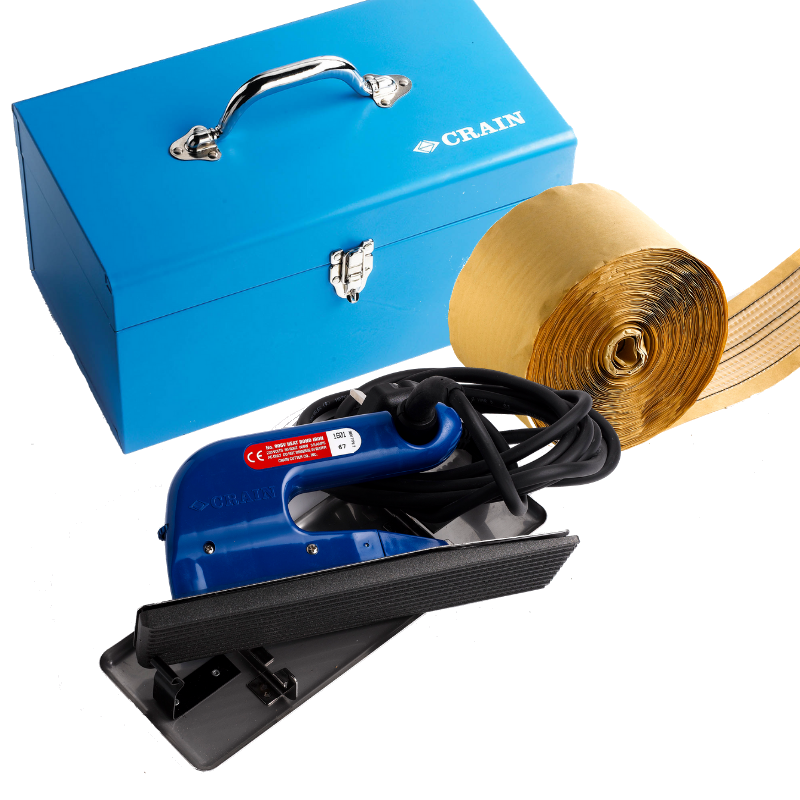
A purpose-built carpet seaming iron operates at higher and more consistent temperatures than domestic alternatives. The defining feature is the grooved base, which controls adhesive flow along the seam tape spine.
Key advantages include:
- Grooved base design: Channels hot-melt adhesive along the tape rather than into the pile, reducing glue rise
- Adjustable heat control: Typically in the range of ~130°C to 220°C depending on tape and backing
- Voltage options: Available in 110V for site safety with transformers or 220V for workshop/domestic use
Economy irons are straightforward and durable, suited to standard domestic work. Deluxe irons provide improved thermal stability, heavier base plates, and finer temperature control—particularly beneficial for dense woven materials and patterned carpets where consistency is critical.
Seam Tapes Compared: Super Golden vs Traxx S20
Seam tape selection has a direct impact on bond strength and finish quality.
Super Golden
- General-purpose tape
- Suitable for domestic broadloom carpets
- Reliable adhesive flow and workable open time
- Good all-round performance
Traxx S20
- Higher tack and stronger construction
- Designed for commercial and heavy-use environments
- Performs well on dense backings and patterned materials
- Produces a firmer, more secure bond line
Tip to Minimise Glue Rise
- Keep the iron centred on the tape spine
- Maintain a steady travel speed
- Avoid excessive heat
- If adhesive squeeze-out occurs, reduce temperature slightly or increase movement speed
Rollers and Weights: Closing the Seam Properly
Rollers help compress the seam, knit fibres together, and set the pile as the adhesive cools. Choosing the correct roller depends on pile height and subfloor conditions.
Straight Axle Roller (4 inch)
- General-purpose option
- Provides consistent, even pressure
Flexible Axle Roller (4 inch)
- Adapts to uneven surfaces
- Reduces drag and marking on textured pile
Big Foot Roller (5 5/8 inch)
- Wider surface area
- Ideal for soft or plush carpets
- Distributes pressure more evenly
A seam weight (~7.5 kg) can be used behind the iron to hold the seam closed while cooling. For dense or difficult materials, a seam tractor can assist in aligning and tightening edges.
When to Choose Economy vs Deluxe Irons
Choose economy irons if:
- You work on standard domestic installations
- Seams are shorter and less complex
- Pattern matching is minimal
Choose deluxe irons if:
- You handle frequent or heavy daily use
- You install patterned or woven carpets
- You require precise temperature stability
- You want smoother glide and reduced temperature fluctuation
Deluxe models reduce thermal variation, helping prevent issues like telegraphing and uneven bonding.
How to Avoid Glue Rise and Visible Seams
Achieving a clean seam requires consistency in technique as much as equipment quality:
- Keep the iron moving—never pause in one position
- Operate at the lowest effective temperature
- Use a grooved-base iron and align it centrally on the tape
- Ensure proper pre-stretching to eliminate edge tension
- Roll the seam while still warm
- Apply weights during cooling to maintain alignment
- Use sharp blades for clean edge preparation
Checklist: Straight Seams vs Patterned Work
Straight Seams
- Economy or deluxe grooved-base iron
- Super Golden seam tape
- Straight axle roller (4 inch)
- Seam weight
Patterned or Heavy Woven Carpets
- Deluxe iron with tighter temperature control
- Traxx S20 tape for higher tack
- Big Foot or flexible axle roller
- Seam tractor and seam weight
- Test alignment and temperature on offcuts before full installation
Tractors, Weights, and Hot Edge Sealing
A seam tractor applies pressure to align and tighten edges before bonding. Follow with a seam weight to maintain closure during cooling.
For edge sealing and repairs, tools such as the Gundlach Hot 2 Seal kit provide a controlled hot-melt applicator ideal for reinforcing frayed edges or performing spot repairs where a full seaming iron is impractical.
Maintenance and Spares
Keeping tools in good condition ensures consistent results:
- Replace worn iron shoes to maintain glide and prevent contamination
- Clean adhesive residue from plates after cooling
- Inspect cables regularly and store irons on heat-safe stands
- Keep applicator sticks and adhesive supplies stocked for repairs
- Warm tapes and adhesives in cold conditions to improve flow
Quick Answers to Common Questions
Can you use a regular iron to seam carpet?
No. Domestic irons lack the grooved base and controlled heat required for proper seam bonding.
How hot does a carpet seam iron get?
Typically between 130°C and 220°C depending on materials and tape. Always test on offcuts first.
How do you make carpet seams less noticeable?
Use clean cuts, correct alignment, appropriate tape, steady iron movement, rolling while warm, and proper pre-stretching.
Where should seams be placed?
Avoid high-traffic zones, doorways, and focal points. Position seams under furniture lines or low-visibility areas where possible.
Can you seam carpet without an iron?
Full seams require a seaming iron. Edge repairs may use hot-melt applicators, but these do not replace an iron for primary installation.
A Simple, Repeatable Seaming Method
- Dry fit and align patterns
- Mark centre lines on tape and backing
- Pre-stretch to remove tension
- Set iron to mid-range temperature
- Run iron steadily along the tape spine
- Close the seam behind the iron by hand
- Roll while warm
- Apply weight during cooling
- Allow full set before trimming or traffic
Summary and Next Steps
Professional carpet seaming comes down to matching the right tools with the right materials and technique. A grooved-base iron protects pile and controls adhesive flow, while the correct tape, roller, and weight ensure a clean, durable finish. For patterned or heavy installations, upgrading to a deluxe iron and higher-tack tape improves consistency and efficiency.
For best results, build a complete kit: iron, tape, roller, and essential accessories. A well-prepared setup reduces errors, speeds up installation, and delivers seams that are both durable and visually discreet.